

A featured contribution from Leadership Perspectives: a curated forum reserved for leaders nominated by our subscribers and vetted by the Construction Tech Review Advisory Board.

Hong Kong Science and Technology Parks Corporation
Hong Kong Science Park as an AI Hub
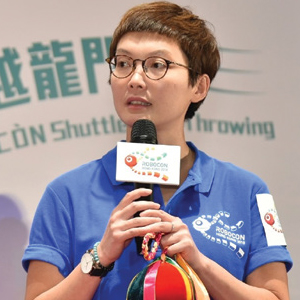
Dr Crystal Fok
AI-powered enterprise applications could deliver more than $52 billion in global market revenue by 2021, according to an IDC study forecast. Within three years, 30 per cent of enterprises would be likely to use conversational speech technology for customer engagement. By 2024, one-third of today's screen-based apps would be replaced by AI-enabled user interfaces and process automation .
It stands to reason that the Hong Kong SAR Government has made AI one of the key focus areas of the city’s innovation and technology (I&T) development strategy to attract high potential deep tech companies and research institutes to Hong Kong.
Building an AI and robotics platform at Hong Kong Science Park
Hong Kong Science and Technology Parks Corporation (HKSTP), as the city’s statutory organisation designated to drive Hong Kong’s I&T development, is spearheading AI and robotics (AIR) initiatives in line with the government’s strategy.
Currently, more than 100 of the 750-plus companies at Hong Kong Science Park are working on AIR-related technologies. They are supported by the state-of-the-art facilities at Hong Kong Science Park and initiatives designed to pool resources, including talent and funding, to draw in more tech companies to conduct their research and development work in Hong Kong.
Immediately, HKSTP will launch the AI Plug@HKSTPinitiative to provide technical support and knowledge exchange on AI technologies. Four programmes will be rolled out aiming at shortening product development cycles, offering technical support and infrastructure for R&D, providing customised training programmes and providing business matching services.
As well, the HKAI Lab has been set up in 2018, jointly with Alibaba Group Holding and SenseTime to accelerate Hong Kong’s AI development and help startups develop and commercialise AI inventions and technologies.
Already, cutting-edge AI solutions pioneered by Hong Kong Science Park partner companies are beginning to revolutionise the way we live and do business. Notably, sensitive and its AI-powered machine vision applications are delivering novel user experiences from telecommunications to medicine and mobility, while leading-edge autonomous car technology is using the Science Park smart campus as a real-life test bed.
Home-grown AI unicorn Sense Time powers economies with its AI solutions and promotes AI education
SenseTime became a startup at Science Park in 2014.
Within four years, it had become the world’s biggest AI unicorn. The company is using machine vision to empower dozens of industries, from surveillance automobile applications, smart city solutions, autonomous cars and healthcare. SenseTime cited research that by 2035, AI could bring a significant impact in 16 major industrial categories and could contribute to the economic growth of 38percent. Machine vision is the most common application of AI, accounting for 70percent of all AI applications.
Besides innovating for business, SenseTime is nurturing future generations through an International Artificial Intelligence Fair for global students. Inaugurated in March in Beijing, the Fair encourages students from different countries to engage in AI and showcase their talent. The company also launched an AI teaching kit in 2018 to offer young people hands-on learning of AIR technology and applications. With the learning kits, students will be able to do voice recognition, image classification and other AI activities.
Hong Kong’s first autonomous driving car company going global from Hong Kong Science Park
AutoX Inc. is Hong Kong’s first autonomous driving car company pioneering cutting-edge AI technology for autonomous driving. With bases in Hong Kong, Shenzhen and the Silicon Valley, AutoX intends to become China’s strongest autonomous car company.
The company has assembled talent in Silicon Valley and China to build the world’s most capable autonomous driving technology team. It is the only company in China with approval to have autonomous cars driving on busy urban roads, not on fixed routes but point-to-point journeys. It is also one of two companies licensed to carry out self-drive grocery delivery in San Jose.
Hong Kong an ideal base for coordinating a globally aligned AI standard
As the AI quest continues globally, the global I&T communities and authorities ought to think about formulating a common standard prescribing a set of criteria that all players in the world should abide by to ensure security, accuracy and ethics in the adoption of the technology.
Currently, different regions in the world have their own set of privacy regulations – the General Data Protection Regulations in the European Union, and privacy laws and regulations in the US and China Data Protection Regulations in China. As the development of AI generates a voracious appetite for big data, data security and governance is crucial for cross-region data transfer. All AI solutions need data for training. Data integrity determines an AI solution’s viability. All sovereign states would want to protect the data within their jurisdiction, but there is an undeniable need to use data across jurisdictions for AI solutions to be globally applicable.
Unlike professionals such as lawyers, accountants and medical doctors, AI solutions are not subject to any certification process that upholds professional standards. There are no accuracy verification mechanisms to ascertain that AI solutions perform as accurately as a certified professional who abides by industry standards. This is a gap that needs to be addressed too.
The issues of data security and operational accuracy lead to the question of ethics. In the arena of autonomous driving, for example, there are lots of finer details to deliberate, such as whether the AI powering an autonomous car should be subject to a driving test or mandatory insurance, or if an accident occurs, who should be held liable? The car manufacturer, the owner or the AI solution provider?
This gives rise to the need, and opportunity, for providing testing and certification service in an internationally accessible location with robust rule of law. HKSTP believes that Hong Kong, as an international metropolis with its proximity to China and a special administrative region, is in a unique position to be an AI testing and certification hub.
Hong Kong embraces innovators from around the world
With its world-class universities, Hong Kong is also ideally placed to leverage the appeal of the territory’s open R&D environment to retain local talent and attract overseas talent to the ecosystem. HKSTP is working closely with the city’s public and private sectors to provide vital support, be it in funding or policy, to build on the achievements of leading technology enterprises and academics in the AI field.
AI-powered enterprise applications could deliver more than $52 billion in global market revenue by 2021, according to an IDC study forecast
Besides innovating for business, SenseTime is nurturing future generations through an International Artificial Intelligence Fair for global students. Inaugurated in March in Beijing, the Fair encourages students from different countries to engage in AI and showcase their talent. The company also launched an AI teaching kit in 2018 to offer young people hands-on learning of AIR technology and applications. With the learning kits, students will be able to do voice recognition, image classification and other AI activities.
Hong Kong’s first autonomous driving car company going global from Hong Kong Science Park
AutoX Inc. is Hong Kong’s first autonomous driving car company pioneering cutting-edge AI technology for autonomous driving. With bases in Hong Kong, Shenzhen and the Silicon Valley, AutoX intends to become China’s strongest autonomous car company.
The company has assembled talent in Silicon Valley and China to build the world’s most capable autonomous driving technology team. It is the only company in China with approval to have autonomous cars driving on busy urban roads, not on fixed routes but point-to-point journeys. It is also one of two companies licensed to carry out self-drive grocery delivery in San Jose.
Hong Kong an ideal base for coordinating a globally aligned AI standard
As the AI quest continues globally, the global I&T communities and authorities ought to think about formulating a common standard prescribing a set of criteria that all players in the world should abide by to ensure security, accuracy and ethics in the adoption of the technology.
Currently, different regions in the world have their own set of privacy regulations – the General Data Protection Regulations in the European Union, and privacy laws and regulations in the US and China Data Protection Regulations in China. As the development of AI generates a voracious appetite for big data, data security and governance is crucial for cross-region data transfer. All AI solutions need data for training. Data integrity determines an AI solution’s viability. All sovereign states would want to protect the data within their jurisdiction, but there is an undeniable need to use data across jurisdictions for AI solutions to be globally applicable.
Unlike professionals such as lawyers, accountants and medical doctors, AI solutions are not subject to any certification process that upholds professional standards. There are no accuracy verification mechanisms to ascertain that AI solutions perform as accurately as a certified professional who abides by industry standards. This is a gap that needs to be addressed too.
The issues of data security and operational accuracy lead to the question of ethics. In the arena of autonomous driving, for example, there are lots of finer details to deliberate, such as whether the AI powering an autonomous car should be subject to a driving test or mandatory insurance, or if an accident occurs, who should be held liable? The car manufacturer, the owner or the AI solution provider?
This gives rise to the need, and opportunity, for providing testing and certification service in an internationally accessible location with robust rule of law. HKSTP believes that Hong Kong, as an international metropolis with its proximity to China and a special administrative region, is in a unique position to be an AI testing and certification hub.
Hong Kong embraces innovators from around the world
With its world-class universities, Hong Kong is also ideally placed to leverage the appeal of the territory’s open R&D environment to retain local talent and attract overseas talent to the ecosystem. HKSTP is working closely with the city’s public and private sectors to provide vital support, be it in funding or policy, to build on the achievements of leading technology enterprises and academics in the AI field.
The articles from these contributors are based on their personal expertise and viewpoints, and do not necessarily reflect the opinions of their employers or affiliated organizations.
