

A featured contribution from Leadership Perspectives: a curated forum reserved for leaders nominated by our subscribers and vetted by the Construction Tech Review Advisory Board.

Google Cloud
A New Era for Smart Analytics and AI in Business
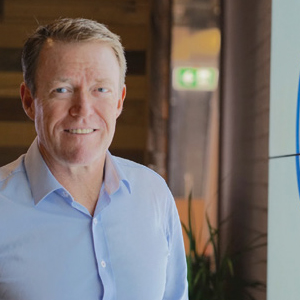
Colin Timm
With that said, it's not easy for businesses to make sense of complex operations, and they often find themselves relying on best-guess rules and heuristics to run things. At the same time, they have no shortage of data. But data without intelligence might as well just be noise.
With its ability to handle compute and data analytics at any scale, cloud computing accelerates the capabilities of machine learning.
Here are a few examples of how smart business analytics and AI can help improve decision making and in some cases, even save lives.
Helping customers make better business decisions
ANZ, Australia’s third largest bank by market capitalization, is a prime example of how businesses can use smart analytics to improve decision making.
Harnessing Google Cloud’s big data analytics capabilities, it is transforming how it uses data to help its Institutional customers make strategic business decisions more quickly on issues like liquidity, risk and cash management, or strategic calls like store locations, inventory and market positioning.
ANZ is also using advanced analytics to drive productivity within the bank. It is now able to automate previously manual operations like analyzing aggregated, de-identified credit card data - a process that used to take days, has been dramatically reduced to only seconds.
When AI can actually save lives
While much is spoken and written about the business benefits of data analytics and AI, these types of technologies have the power to actually save lives. Just look at Australian analytics and software engineering agency, Max Kelsen, which uses Google’s open machine-learning research database, TensorFlow, to improve the survival rate of people with cancer by predicting their response to treatment.
One in four Australians are diagnosed with cancer during their lives. When patients are correctly diagnosed with cancer, the best treatments achieve a 48 per cent success rate over three years but this also means that millions of dollars every year are spent on unsuccessful or partially successful cancer treatments.
Max Kelsen combined whole genome analysis with AI from TensorFlow to act as a key stepping stone towards fully personalized, highly effective treatment plans. By using ML and AI, Max Kelsen can better predict how patients will respond to immunotherapy treatments for cancer, while providing the ability to explore new techniques and experiments at an unprecedented scale.
This is particularly important as processing whole genome sequences is a tremendously difficult task. With 3.2 billion base-pairs per sequence, each processing a single whole genome take almost 300GB of space, this volume of data simply can’t be processed and analyzed without the help of AI and analytics.
The time is now
The applications across industries to make smarter, faster decisions are vast. We’ve only just scratched the surface of how AI and data analytics can transform business operations. And while like with every new tech adoption there will be challenges, the benefits are clear and the time is now for businesses to invest in AI and data analytics tools.
ANZ is also using advanced analytics to drive productivity within the bank. It is now able to automate previously manual operations like analyzing aggregated, de-identified credit card data - a process that used to take days, has been dramatically reduced to only seconds.
When AI can actually save lives
While much is spoken and written about the business benefits of data analytics and AI, these types of technologies have the power to actually save lives. Just look at Australian analytics and software engineering agency, Max Kelsen, which uses Google’s open machine-learning research database, TensorFlow, to improve the survival rate of people with cancer by predicting their response to treatment.
One in four Australians are diagnosed with cancer during their lives. When patients are correctly diagnosed with cancer, the best treatments achieve a 48 per cent success rate over three years but this also means that millions of dollars every year are spent on unsuccessful or partially successful cancer treatments.
Max Kelsen combined whole genome analysis with AI from TensorFlow to act as a key stepping stone towards fully personalized, highly effective treatment plans. By using ML and AI, Max Kelsen can better predict how patients will respond to immunotherapy treatments for cancer, while providing the ability to explore new techniques and experiments at an unprecedented scale.
This is particularly important as processing whole genome sequences is a tremendously difficult task. With 3.2 billion base-pairs per sequence, each processing a single whole genome take almost 300GB of space, this volume of data simply can’t be processed and analyzed without the help of AI and analytics.
The time is now
The applications across industries to make smarter, faster decisions are vast. We’ve only just scratched the surface of how AI and data analytics can transform business operations. And while like with every new tech adoption there will be challenges, the benefits are clear and the time is now for businesses to invest in AI and data analytics tools.
The articles from these contributors are based on their personal expertise and viewpoints, and do not necessarily reflect the opinions of their employers or affiliated organizations.
